Gallipoli in Spring: Why Baia Verde Feels Different Before Summer
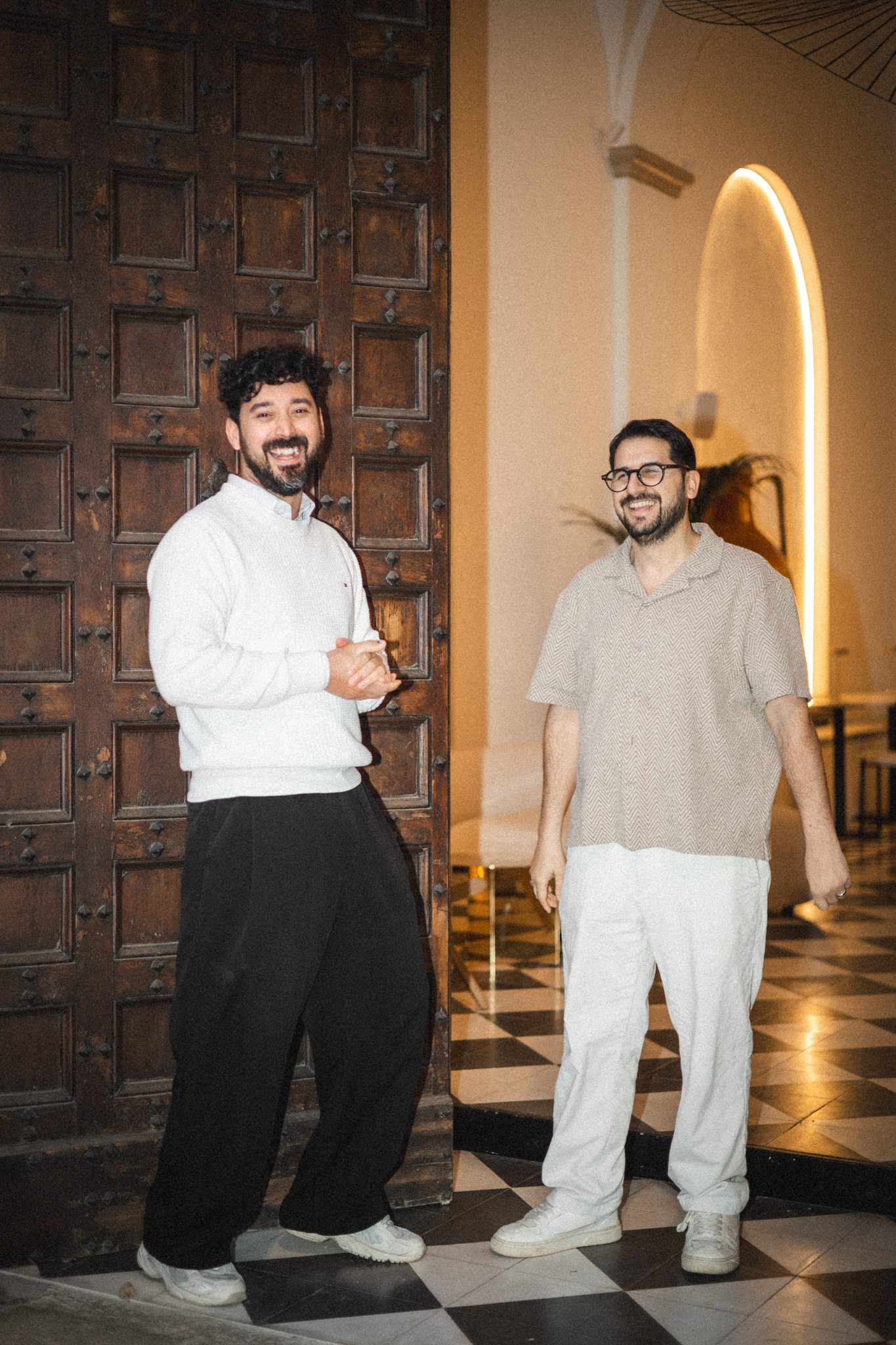
The water at Baia Verde is a particular shade of green in spring. Not the saturated, almost artificial blue of high summer photographs, but something quieter — a transparency that lets you see the sandy bottom even from the shore. The beach is long. The light is already warm but not yet heavy. You can hear the sea rather than the crowd. And somewhere behind you, through the Mediterranean scrub and the pale morning air, Gallipoli is already awake, already beautiful, already entirely itself.
This is the version of Salento we love most. And it is the one that most visitors never quite find, because they arrive when summer has already taken over.
From Palazzo Piccinno in Parabita, this is the version of Gallipoli we most often recommend to guests.

There is another version of Gallipoli
There is a version of Gallipoli that most people already know before they arrive. It is the Gallipoli of postcards and peak season — bright beaches, crowded lidos, music in the distance, and the unmistakable energy of one of the most famous corners of the Ionian coast. Sea and nightlife on one side, a historic centre shaped by centuries of history on the other. It is real, and it is genuinely beautiful. We are not here to argue against it.
But there is another version. And for us, it is the more persuasive one.
I remember the first time I visited Gallipoli in summer. The old town is quite small, and it was completely full. There was a wild, wonderful energy at the fish market down the staircases by the main gate — the smell of fried fish, people talking loud, everyone trying to find a table or simply drifting through the narrow streets. It was alive in the way that only very loved places are in the height of their season. But since that first visit, I have come to believe that Gallipoli makes more sense in spring. That the place reveals something more essential about itself before the volume rises.
Before the season reaches its peak, Gallipoli feels like what a small fish town on the Ionian coast should feel — generous, unhurried, and full of things to give.

Why visit Gallipoli in spring
Gallipoli has a natural duality that spring allows you to experience fully. It is both seaside and city, both a summer destination and a genuinely historic place — the Pearl of the Ionian Sea, known not only for its beautiful beaches but for its baroque churches, its old town, and the layers of architecture that have accumulated over centuries.
In high summer, many visitors understandably orbit around the coast. The days get absorbed by logistics — finding parking, finding a spot on the beach, finding a table for lunch. The city and the sea become harder to hold together in a single day.
Spring changes that entirely.
The days still belong to you. You can move with ease, make plans without over-planning, be spontaneous in a way that peak season rarely allows. You can spend the morning by the sea and still have room in the day for the old town, a long lunch, an aperitivo by the water, a slow return inland in the evening. The famous Gallipoli light is already there — that Ionian brightness that has drawn people to this coast for centuries — but it sits inside a quieter frame.
Parking, which in summer becomes an almost daily negotiation, is simply not a problem. You arrive. You find a space. The town opens rather than crowds you.
For travelers wondering whether Gallipoli in spring is worth it, our answer is simple: yes, deeply so. Especially if what you are looking for is not only a beach holiday, but a more complete way to experience Salento — one that moves between coast and town, sea and stone, brightness and quiet.

What Baia Verde feels like before the season changes
Baia Verde beach, near Gallipoli, is very much part of local beach life in this corner of the Ionian coast. Long before it became a summer name people recognised from afar, it was simply one of the natural ways this coast is lived — and that quality has never entirely left it.
In spring, what defines it is not nightlife or sunbed culture. It is scale.
The beach feels long again. The water shows its color more clearly. The light has space around it. You notice the pale sand, the shallow edge of the sea, the Mediterranean scrub and greenery that frame the coast. You can arrive late in the morning without the sense that the day has already escaped you. You can walk without feeling you have entered the height of summer before you were ready.
There is also something emotionally different about Baia Verde in spring. It feels less performative. Less like a place people come to consume, and more like a landscape they come to inhabit for a little while. You can swim early, walk slowly, sit with a coffee from a beach club, and let the morning do whatever it wants with you.
That quality — of a place still in possession of itself — is what makes Baia Verde in spring so quietly special.

Gallipoli beyond the beach
In spring, the old town feels exactly right.
Still lively, but not overwhelmed. The pace allows you to notice details — laundry moving slightly between buildings, the texture of old walls, the pleasure of walking without an agenda. A coffee taken standing. A lunch that stretches naturally into afternoon. The hour before sunset when the whole place seems to soften at once.
This is also where Gallipoli begins to make sense as more than a beach address. The Basilica Cattedrale di Sant'Agata is one of those interiors that genuinely surprises you — one of those spaces you step into briefly and then cannot quite leave. The harbor changes character as the day moves through it. The old streets reward wandering far more than mapping.
By the time the light starts to drop, Gallipoli becomes something else again. Il Bastione is where we always end up — right there at the edge, watching the sun lower itself into the sea with a drink in hand. Il Faro has the same quality: relaxed, beautiful, shaped entirely by the water around it. These are not tourist stops. They are simply the places where a day in Gallipoli lands well.

Why we prefer staying near Gallipoli, not inside it
For some travelers, staying directly in Gallipoli will always be the right choice. If the main desire is to be at the heart of the busiest summer energy, that makes perfect sense.
But for many others, staying near Gallipoli creates a much better rhythm.
Parabita, a small town in southern Salento around twenty minutes from Gallipoli, offers a different rhythm entirely. Close enough to reach Baia Verde beach and the Gallipoli old town with ease, but removed enough to let the stay breathe. It is a town with a more local, lived-in pace. It opens the journey outward, so that Gallipoli becomes part of your stay rather than the whole frame of it. You go to the coast when you want the sea, the old town, the aperitivo, the brightness. Then you come back to somewhere quieter, slower, and more intimate. Somewhere that still feels connected to real local life. Somewhere where the day can land well.

For us, that distance is not a compromise. It is part of the pleasure.
Palazzo Piccinno is an adults-only boutique guesthouse in a historic palazzo in Parabita, a quieter base for exploring Gallipoli and the Ionian coast. We are not a hotel on the beach. We are something else — a place that offers guests a more personal and refined way to experience Gallipoli and Baia Verde, with enough space around the stay to let southern Puglia actually sink in.
For travelers asking where to stay near Gallipoli, this is often the more interesting answer.
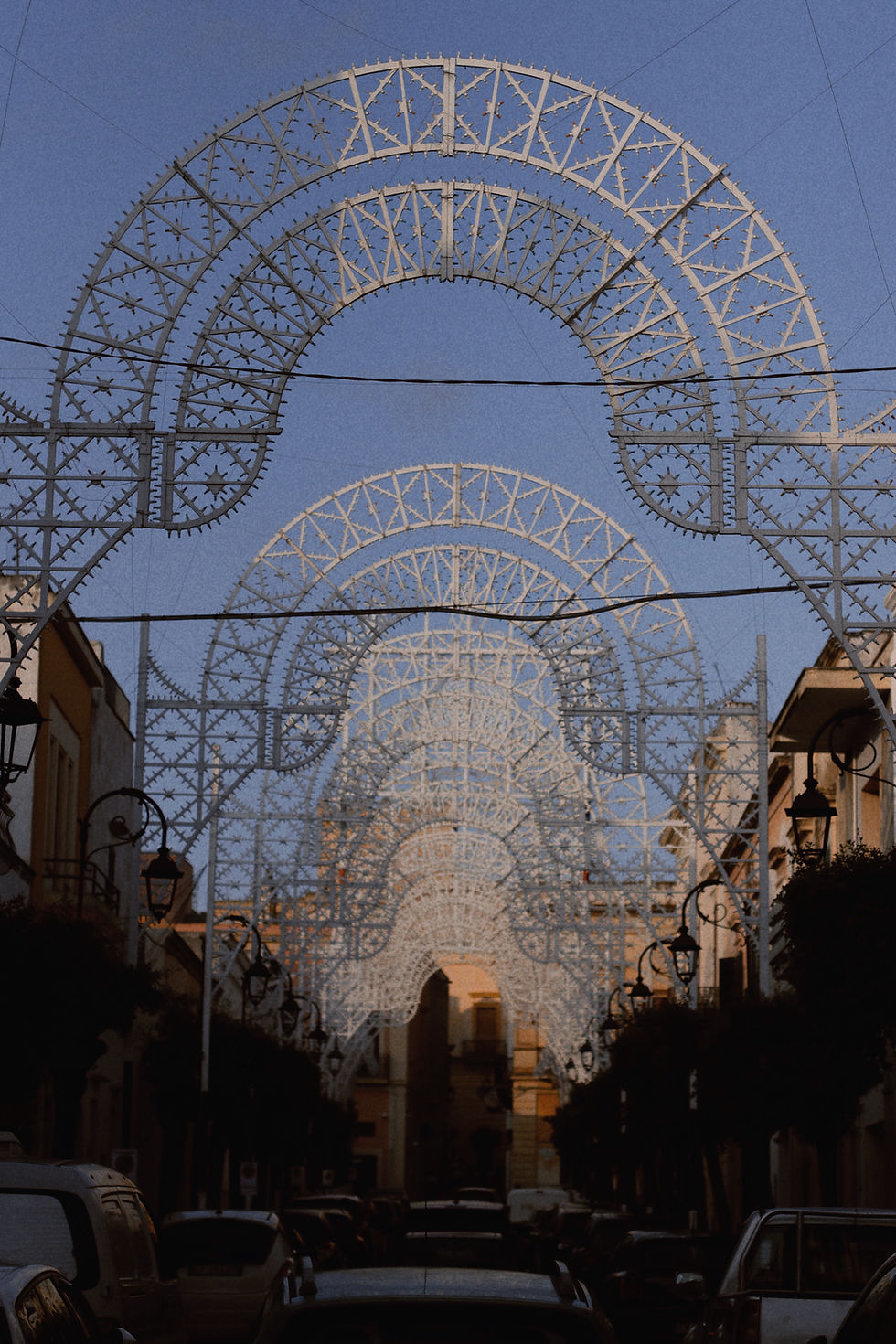
A spring day from Palazzo Piccinno to Baia Verde and Gallipoli
The most useful thing a travel post can do is not just describe a place, but help you imagine how the day actually works.
So here is how ours usually goes.
You wake slowly in Parabita. Breakfast at the palazzo — unhurried, atmospheric and relaxed. Then, once the day has properly opened, you head toward the coast.
By late morning you are at Baia Verde. A good starting point is the public parking near Waikiki Restaurant, which places you in exactly the right part of the coast. The lungomare opens up from there — a long seafront stretch where locals walk, run, and stay close to the water. C'est La Vie Beach is a lovely first stop if you want an early swim, still and clear before the day gets busy. From there, we love walking toward Por do Sol — one of our favourite beach clubs on that stretch, not only for its setting but for how it feels: inclusive, relaxed, with consistently good service and a sense of welcome that not every beach club here manages.

Take what you need from the sea. Spring gives you permission not to overstay the moment.
From the coast, Gallipoli old town is the natural second movement of the day. Walk in without too much structure. Let the streets guide you. Stop at the Basilica. Browse slowly — Blanc is worth a visit for jewellery and considered design pieces, and there is a hidden cocktail bar inside that makes the detour even better. The sea sponges sold in some of the old town shops are one of those small things that somehow feel very Gallipoli.

For lunch, we tend to point guests toward a handful of places we genuinely return to. Le Puritate is an institution — loved by locals, carrying its reputation naturally. Osteria Briganti was first recommended to us by local friends and has remained a favourite ever since. Il Pettolino is unpretentious and very good, with a view that improves everything. La Vinaigrette offers a rooftop over the port and consistently good food and service. Matre has that balance of quality and ease that is harder to find than it sounds.
Stay through to sunset if you can. Il Bastione is where the day completes itself.

Then, instead of sleeping inside the busiest stretch of coast, you return inland. Back in Parabita, the evening regains quiet. The day held everything — coast, town, sea, history, food, light — and ended somewhere personal.
That, for us, is one of the most elegant ways to move through this corner of Puglia.

Who this kind of trip is really for
Not every traveler wants the same version of Salento. Some want the beach at full volume. Some want total countryside seclusion. Some want nightlife first and everything else as background.
But the rhythm we are describing — Gallipoli and Baia Verde in spring, with Parabita as a base — suits a specific kind of traveler. One who wants beauty without excess. Who cares about atmosphere as much as itinerary. Who likes the idea of waking up in a historic house more than checking into a generic resort. Who travels for feeling, for the quality of an hour, for the kind of day that stays with you.

Couples, solo travelers, adults who want their time in Puglia to feel composed — not stiff, not formal, just better held.
Spring tells the truth more gently than summer does. Places remain themselves. The coast has not yet been transformed entirely by the season. The historic towns still belong first to their own rhythms. The weather invites movement without demanding it. And the whole region feels open rather than overcommitted to one version of itself.
That is the real luxury here. Not the beach club or the nightlife, but the feeling of having a day that belonged to you.
A quieter base for Gallipoli and Baia Verde
For travelers planning a spring trip to Salento, Palazzo Piccinno in Parabita offers a different relationship with Gallipoli and Baia Verde — close enough to reach the coast and the old town with ease, but far enough to experience Salento with a little more intimacy, ease, and character.
Set in a historic palazzo on Via Coltura in Parabita, in southern Salento, we suit guests drawn to slower mornings, thoughtful hosting, and a more personal way of moving through this part of Puglia. Not a hotel in Gallipoli. Something quieter, more considered, and — we think — more lasting.
For guests looking for a quieter and more personal place to stay near Gallipoli, Palazzo Piccinno offers a slower way into this side of Salento. If spring is the right season to begin, Parabita might be the right place to return to each evening.

We would love to have you.
Explore our rooms — or, when you are ready, book your stay.
You might also enjoy reading
If this piece made you curious about the wider rhythms of Salento across the year, our guide below goes deeper into every season — when to come, what to expect, and how the region changes from month to month.

Comments