Laurenji Bloom at Palazzo Piccinno: Local Art in Parabita
A collaboration shaped by instinct, intimacy, and a dreamlike vision of Puglia

Some collaborations do not begin with a plan. They begin with a feeling.
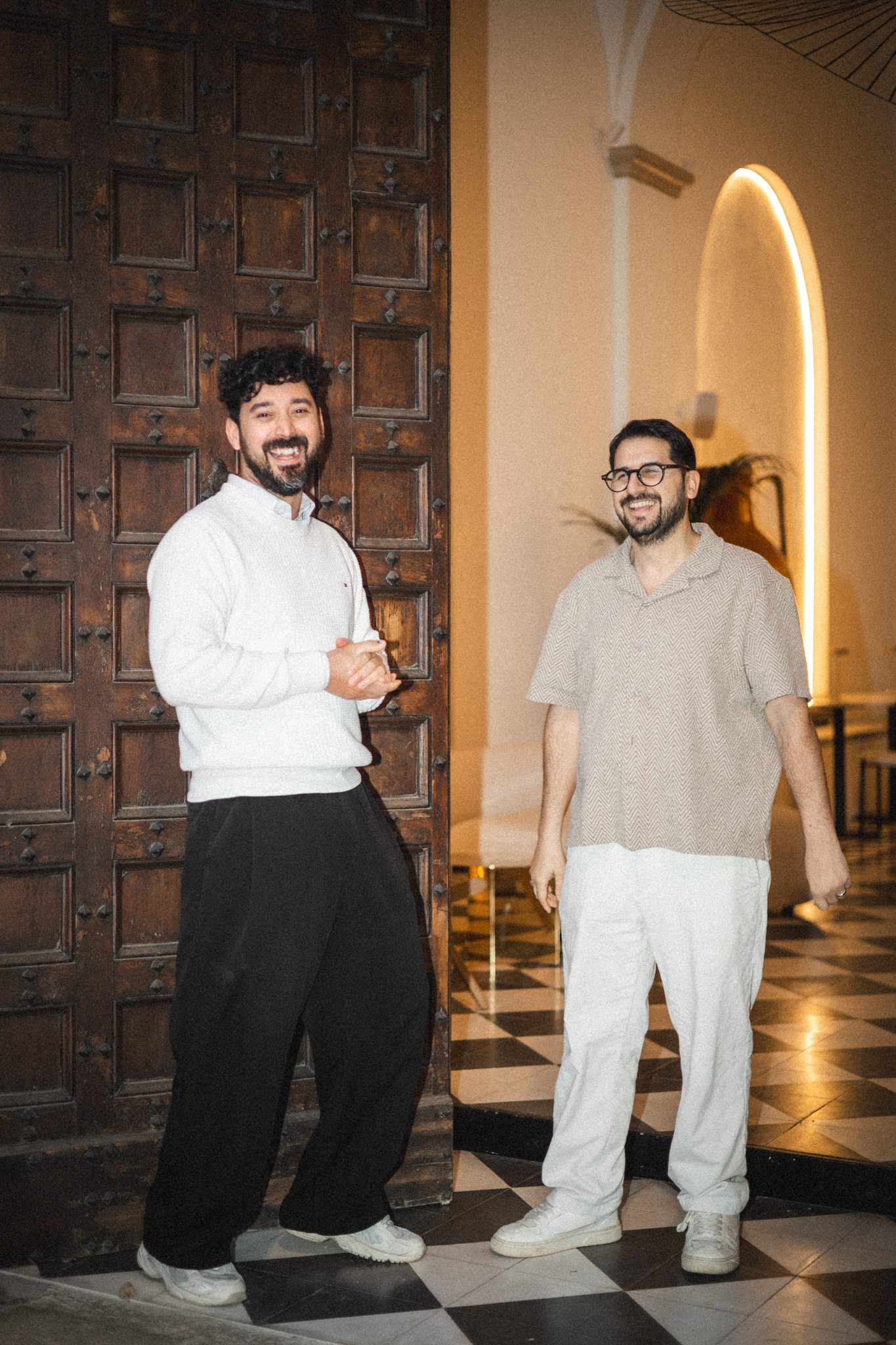
Ours with Laurenji Bloom started very simply, over a beer in a café here in Parabita, not long after we had moved to town. Laurenji — a Parabita-based illustrator deeply connected to Salento and the wider region of Puglia — had already built a visual language that felt unmistakably her own: feminine, intuitive, suspended somewhere between waking life and daydream.
Over time, that first meeting turned into friendship, then into smaller collaborations, and eventually into something more complete.
For this season at Palazzo Piccinno, Laurenji was given the freedom to shape one of our rooms through her own vision of Puglia Surrealista — the creative lens that guides this year at the Palazzo. It felt like the natural next step: not simply inviting an artist to contribute to the house, but trusting someone we admire to enter into dialogue with it more fully.
The result feels less like a room intervention and more like a world of its own — intimate, atmospheric, and quietly surreal.
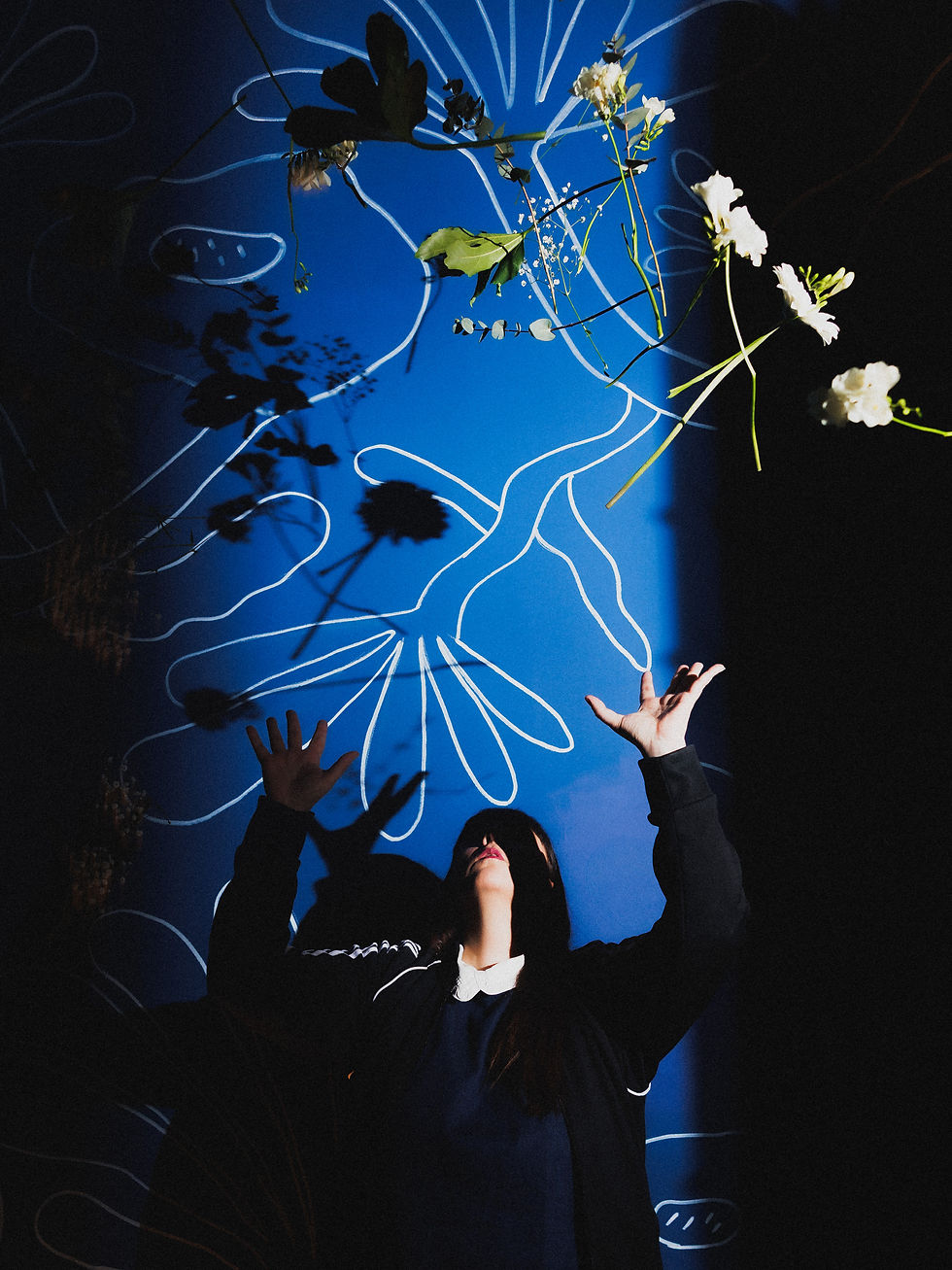
A local artist inside the life of the Palazzo - Laurenji Bloom at Palazzo Piccinno
What we love most about Laurenji’s work is not only its visual identity, but its emotional texture. Her images feel instinctive and interior, full of softness, nostalgia, irony, and a quiet feminine force. They drift toward dream, but never lose their connection to place.
That matters to us.
At Palazzo Piccinno, working with local artists in Puglia is not a decorative gesture or a branding exercise. It is part of how we imagine hospitality. We are always interested in the people who shape the cultural and emotional life of this corner of Salento, and in finding ways for their work to live naturally inside the house.
Laurenji’s presence at the Palazzo extends beyond the room itself. She also designed part of our mise en place and pottery, allowing her visual language to move beyond painting and into the gestures of everyday life. We loved the idea of her work travelling across different forms — not only art to be looked at, but art to be lived with, touched, and encountered slowly throughout the stay.
In that sense, her collaboration reflects something we care about deeply: making space for local artists and artisans in Puglia in ways that feel genuine, useful, and alive.

A room shaped by Puglia Surrealista
This year at Palazzo Piccinno, we are moving through the theme of Puglia Surrealista — a Puglia that feels familiar, but slightly heightened. A place where everyday rituals, local symbols, and ordinary beauty drift just enough to become poetic.
Laurenji’s work felt naturally aligned with that idea.
Her room at the Palazzo is not simply decorated with art. It is shaped by a sensibility: expressive, intimate, dreamlike, and emotionally charged. Through her intervention, the room becomes a space where instinct, memory, femininity, and quiet surrealism come together.
For guests, this makes the collaboration something more than visual. It becomes experiential. Staying in the room means inhabiting a local artist’s interpretation of Puglia — not in a grand or theatrical way, but in a subtle one, woven into atmosphere, form, and feeling.
That, for us, is one of the most meaningful ways art can enter hospitality.


Why this collaboration matters to us
For us, this is also what it means to work with local artisans and artists in Puglia. Not as a statement, and never as decoration, but as a real exchange with the people who give this place its texture and soul.
Laurenji is part of that.
Her connection to Parabita, her sensitivity, and the way she translates feeling into form make her presence here feel deeply right to us. She is a friend, a collaborator, and one of those local artists whose work reminds us that beauty can still be quiet, instinctive, and close to home.
For guests staying at Palazzo Piccinno, collaborations like this are part of what makes the experience different. They offer another way of encountering local culture — not through a list of recommendations alone, but through the very spaces, objects, and gestures that shape daily life inside the house.
In that sense, Laurenji Bloom’s work says something essential about what Palazzo Piccinno wants to be: a place where hospitality and local creativity meet naturally.

In conversation with Laurenji Bloom
To understand her project more deeply, we sat down with Laurenji and spoke about instinct, place, memory, and the inner world that shapes the way she creates.
For those meeting your work for the first time through Palazzo Piccinno, how would you describe your artistic world?
My artistic world is a dreamlike place suspended in the clouds. In this place, where my images live, pastel shades prevail, as do black and fuchsia. It’s a rounded place, where flowers always bloom and the surreal blends with the ephemeral, just like the clouds and birds that never travel in the same skies. Here, women are always the protagonists.
Your work feels suspended somewhere between dream and memory. What usually comes first for you — an image, a feeling, a story, or a symbol?
Everything always stems from an emotion, from the mood of the moment. I let my feelings choose for me what to draw and what colours to use. Nostalgia usually prevails, though I’m not sure for what. Everything always seems suspended in another time and space, muffled, blurry, like in a dream — imperceptible, fleeting. Sometimes all this meets irony.
There is something deeply feminine, instinctive, and slightly surreal in the way you compose your work. Do you feel drawn to the subconscious when you create?
What I don’t say with words, I express through art. I can almost never explain the meaning of a work. Sometimes it comes out of necessity, because a confused fragment of an image appeared to me in a dream. Other times, something I saw in reality suggests what to create. But it’s always unclear at first, so I think about it, trying to put the pieces together, until I clearly visualise the image in my mind. Then it’s time to create it. I often have this epiphany as soon as I wake up. After finishing a work, I feel liberated, like finally managing to untangle a tangled thread.
Was there a particular emotion, idea, or tension you wanted the room to hold for this specific work?
Chaos — beautiful, creative, moving, and overwhelming. The flower, beautiful par excellence, yet naturally grounded, here seems almost to fly, light and sinuous, making its way through the ugliness that surrounds us, bringing delicate wonder and spontaneous beauty. Petal after petal, stem after stem, leaf after leaf, everything becomes a merry-go-round of overwhelming beauty. And the birds follow this light movement.
Palazzo Piccinno this year moves through the lens of Puglia Surrealista — a Puglia that feels real, but somehow heightened. Did this idea resonate with your own practice?
Puglia is becoming a melting pot of diverse cultures and influences. In this context, creating is even more stimulating. The idea of Puglia as a surreal place, where tradition and innovation meet, provides me with inspiration every day. In this new landscape, even the simple sight of the sea can become dreamlike.
What captures your imagination lately?
Everything. Everything can become a stimulus, always. I observe, but rarely look. I store everything. I rework, I dream, and finally I conceive the image. Observing means being halfway there. Emotions, colours, and imagination take care of the rest.

A quieter way of bringing art into hospitality
At Palazzo Piccinno, we believe the most meaningful collaborations are the ones that change the atmosphere of a place from within.
Laurenji Bloom’s work does exactly that.
Through one room, through objects on the table, through pottery touched in everyday gestures, her visual language becomes part of the life of the Palazzo. It allows guests to encounter local art not as something distant or formal, but as something lived with closely.
For us, that is one of the most beautiful ways to work with artists in Salento: slowly, personally, and in a way that gives their work real presence inside the guest experience.
We thank Laurenji for sharing part of her world with us and invite you to discover her work online — and, hopefully, to meet her and say hello at her concept store in Parabita.

Comments