Massimo Pasca: Art, Identity, and the Creative Spirit of Parabita
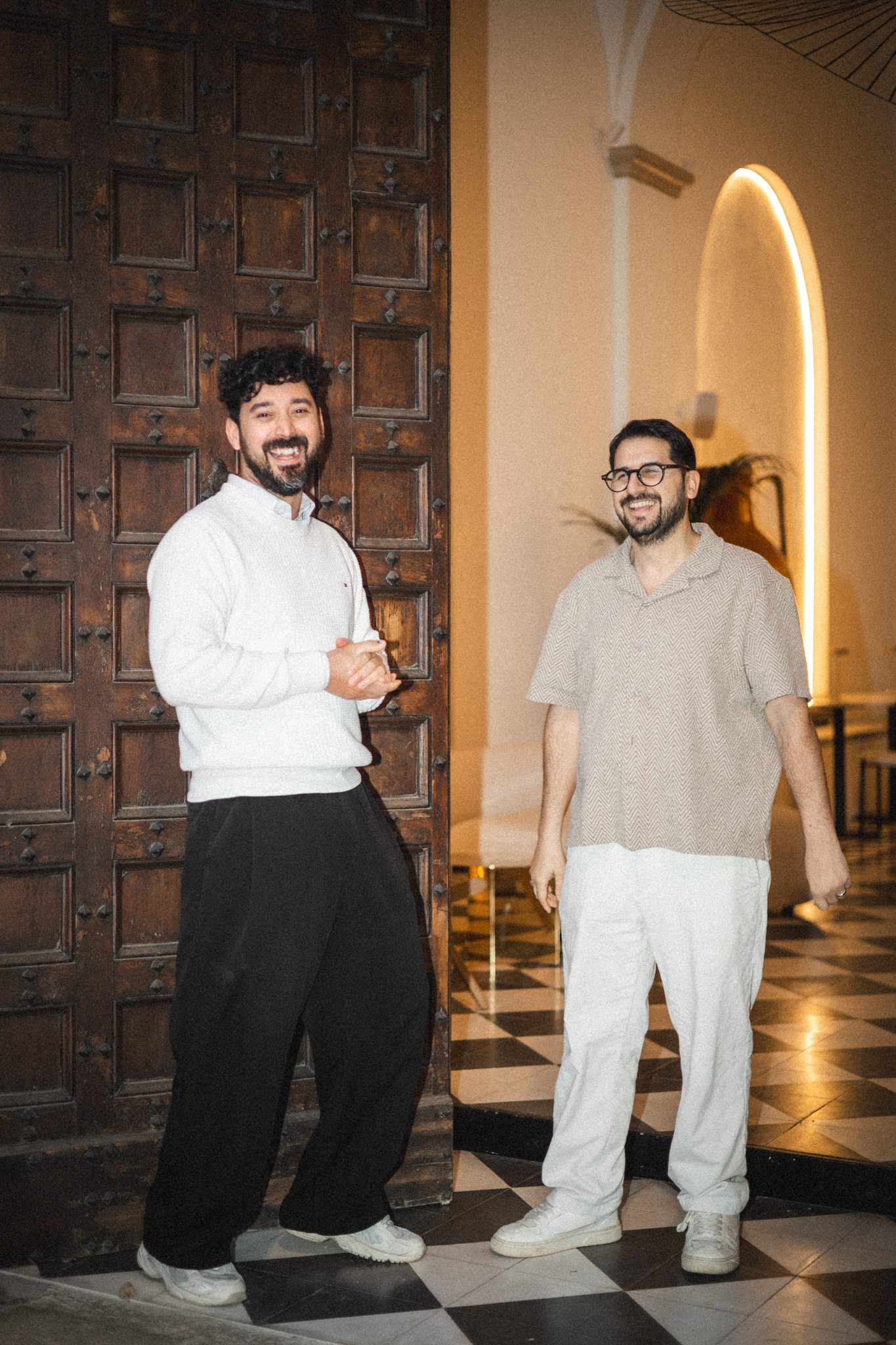
A studio visit that reveals another side of Salento

At Palazzo Piccinno, we have always believed that a stay becomes more meaningful when it opens onto the people who shape the place around it. Not only restaurants, beaches, or beautiful landscapes, but artists, artisans, musicians, and local voices that give a town its real texture.
Massimo Pasca is one of those voices.
A contemporary artist and illustrator from Parabita, Massimo has built a visual language that feels bold, layered, ironic, and unmistakably rooted in the South. His work moves between symbolism and satire, popular culture and memory, vivid colour and sharp narrative instinct. It carries something we recognise deeply: the humour, contradictions, resilience, and imagination that belong to this part of Puglia.
For guests staying at Palazzo Piccinno, discovering Massimo’s world is one of the ways we love to share the cultural life of Parabita — not as something staged, but as something living, personal, and real.

An artist shaped by two worlds
If you spend enough time in Parabita, you begin to notice that creativity here does not arrive with noise. It appears naturally: in conversation, in gestures, in music, in the way people speak about their town. It is part of the atmosphere. And sometimes, it takes form in the work of people who were born here and carried that energy with them far beyond its borders.
Massimo Pasca is one of the most distinctive contemporary artists to emerge from Salento. Born here and artistically shaped by his years in Pisa, he grew into a multidimensional creative figure: illustrator, painter, musician, and storyteller. His style has often been described as visionary, pop, pulpy, poetic, and beautifully irreverent, but what matters most is that it feels entirely his own.
There are echoes of larger references in his work — the immediacy of pop art, the theatricality of satire, the symbolic force of folk memory — yet none of it feels borrowed. Massimo’s work is recognisable because it transforms those influences into a language deeply connected to his own world.
What makes him especially compelling is the way he allows tradition and rebellion to coexist. In his hands, southern identity is never frozen in nostalgia. It becomes contemporary again: vivid, ironic, alive.

The language of his art
Massimo works with a dense and expressive visual vocabulary made of symbols, recurring figures, cultural references, and layered stories. His illustrations are often full of characters, objects, and allusions that invite the eye to keep moving, discovering something new each time.
There is wit in his work, but also tenderness. There is instinct, but also reflection. The macabre sometimes appears, though never in a heavy way — it becomes playful, almost theatrical, transformed by colour and rhythm.
What runs through his work most powerfully is a sense of place. You can feel the echo of rural Salento in it: the warmth, the poverty, the pride, the stubbornness, the spirituality, the survival instinct. His images carry traces of the South not as postcard material, but as lived culture.
And yet his world also speaks to a wider visual imagination. Figures and references from art, literature, music, and collective memory appear and reappear in unexpected ways. Icons from the past are reinterpreted with vivid colour and decisive lines, as though history were being pulled into the present and taught a new language.
This is what makes Massimo Pasca’s work so engaging: it does not simply depict a world, it builds one. A world where irony and memory live side by side, and where southern identity is constantly being rewritten in contemporary form.


A return to Parabita
After years of working and creating in Pisa, Massimo returned to Parabita — to the same streets, atmosphere, and visual memories that shaped him from the beginning.
There is something powerful in that kind of return. When an artist comes home, the work often deepens. It becomes more rooted without losing complexity. In Massimo’s case, returning to Parabita seems to have sharpened the connection between his art and the place that first formed his imagination.
Parabita has always held a particular balance: quiet and intensity, simplicity and character, intimacy and strong identity. Massimo’s work seems to carry that same tension. It feels contemporary, but never detached. It speaks outward, while remaining tied to the local.
Today, he is not simply an artist from Parabita. He is part of its living cultural fabric — contributing to its creative energy, collaborating with others, and reminding anyone who pays attention that small towns can hold large and evolving worlds inside them.
At Palazzo Piccinno, this matters deeply to us. We are drawn to the people who make Parabita more than a destination — the people who give it texture, meaning, and cultural presence. Massimo is one of them.

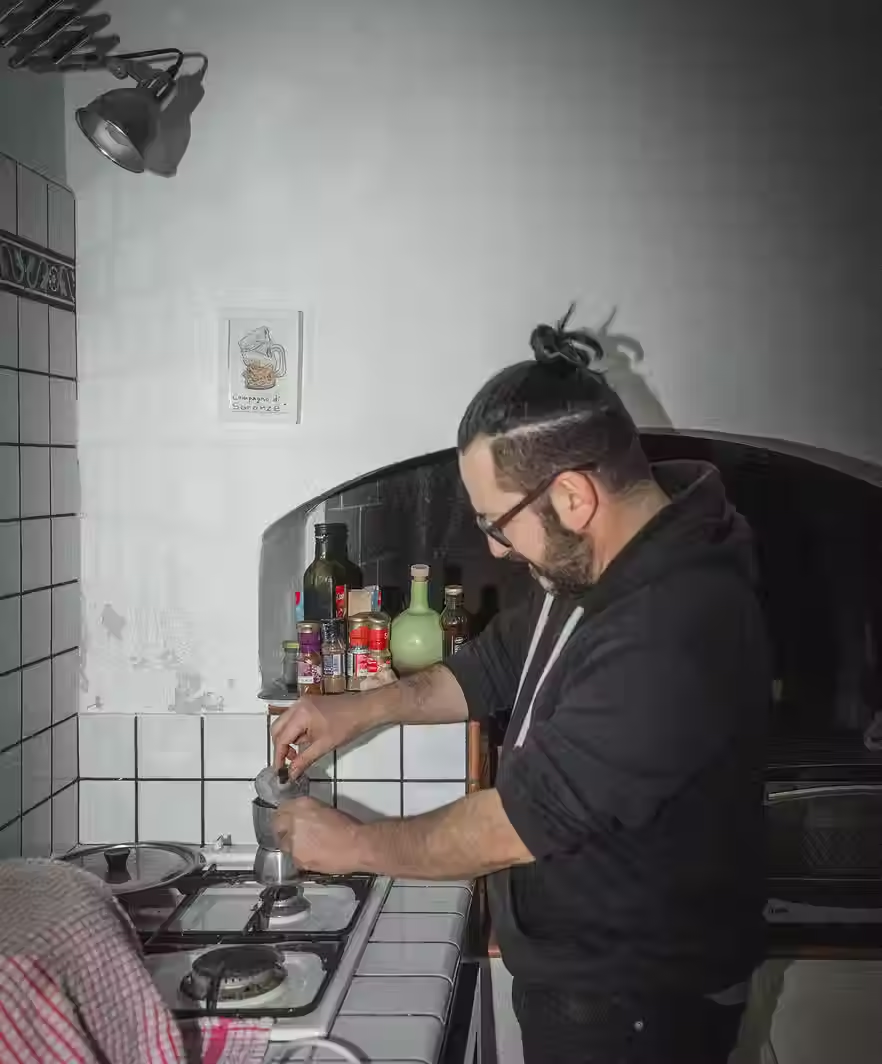
Visiting Massimo Pasca in Parabita
Massimo’s home and studio in Parabita offer a more personal way to encounter his work. This is not a conventional gallery experience with rigid opening times or formal distance. It feels closer than that — more human, more direct, more connected to the place itself.
Seeing his works in Parabita adds another layer to them. The colours, symbols, humour, and visual tension seem to belong even more clearly to the town around them. What might feel striking in a white-walled gallery feels somehow even more alive when seen here, where the artist’s own geography still surrounds the work.
For guests staying at Palazzo Piccinno, we are always happy to arrange a private visit, depending on availability. It may become a simple introduction, a conversation around his work, or an opportunity to see more closely how local culture continues to take shape through contemporary art.
This is exactly the kind of experience we love to share. Not something generic, not something designed for everyone, but something intimate and rooted — a meaningful encounter with the living culture of Parabita.


Why this encounter matters
Guests who choose Palazzo Piccinno are often looking for more than a beautiful room. They are looking for connection — to a place, to a rhythm, to a way of life that feels real.
Encounters like this are part of that promise.
Meeting Massimo Pasca offers a deeper way into Parabita. Through his work, you begin to understand something essential about the town and, perhaps, about the South more broadly: its humour, its contradictions, its symbols, its emotional charge, its ability to transform memory and difficulty into imagination.
His work mirrors that spirit. It is bright, layered, rhythmic, ironic, and alive.
That is why we share it with our guests. Because for us, hospitality is not only about comfort. It is also about opening the door to the cultural life of a place — the people, stories, and creative energy that give it value beyond the obvious.
Massimo is part of that world. And discovering his work is one of the ways Parabita begins to reveal itself more fully.
Practical Information — Visiting Massimo Pasca in Parabita
Location: Parabita, Puglia, just a few minutes from Palazzo Piccinno
How to visit: Guests can contact us directly and we will be happy to arrange a visit, depending on availability
What to expect: Illustrations, paintings, limited editions, and a deeply personal contemporary visual world shaped by Salento
Best for: Art lovers, collectors, and travellers seeking a deeper connection with local culture in Puglia
The photographs in this story were captured by our dear friends Anja and Sandro from WeAreOyster — whose eye for quiet beauty mirrors the way we experience Salento.


Comments